04
Human-in-the-loop isn't a limitation.
Full autonomy sounds impressive until something goes wrong. The smartest AI systems know when to ask for help.
Amara Osei
3 min read
Let's dive deep:
There's a trend in AI right now that treats human involvement as a bug — something to be engineered out. Fully autonomous. Zero-touch. No humans needed. It sounds efficient on a pitch deck. In practice, it's a liability.
The reality is that most business processes have edge cases that require judgment. A refund request that technically violates policy but comes from a long-standing customer. A support ticket that looks routine but hints at a deeper product issue. An approval that's borderline and could go either way.
"The first time Relay flagged an edge case instead of just guessing, I knew this was different from every other AI tool we'd tried." — Leo Marchetti, VP of Support at Curo Health
These are the moments where AI alone isn't enough. Not because the technology is limited, but because the decision has consequences that require accountability. Someone needs to own it.
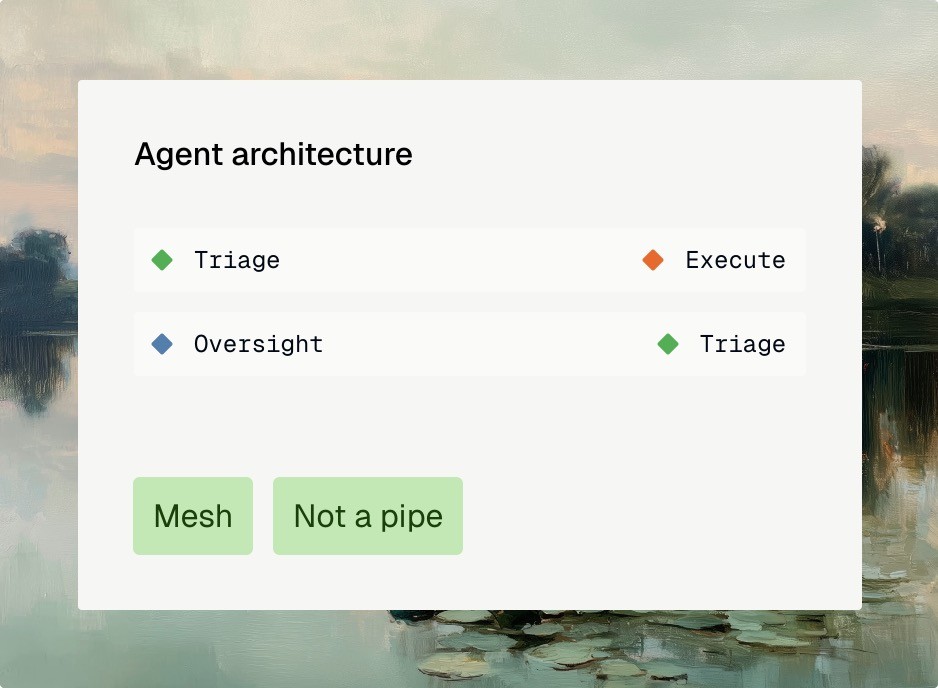
At Relay, human-in-the-loop isn't a fallback. It's a design principle. Our agents handle the 80 percent that's routine and predictable. For the 20 percent that's ambiguous, they escalate — cleanly, with context, to the right person. No guessing. No silent failures. Just a clear handoff that says: here's what I know, here's what I recommend, what do you want to do?
From the Relay team