03
The ops stack is bloated.
Teams are drowning in tools that don't talk to each other. The answer isn't another integration - it's an agent that bridges the gaps.
Daniel Prieto
5 min read
Let's dive deep:
The average mid-size SaaS company uses over 80 tools. Eighty. And the operations team is expected to be the glue that holds them all together. They're the ones manually moving data from the CRM to the billing system, from the support tool to the product tracker, from the spreadsheet to the dashboard.
Every year, there's a new platform promising to be the "single source of truth." Every year, companies adopt it and discover they now have 81 tools instead of 80. The integration problem doesn't get solved by adding more integrations. It gets solved by changing how work flows between systems.
"Relay didn't replace any of our tools. It just made them actually talk to each other for the first time." — Nadia Petrov, COO at Launchbase
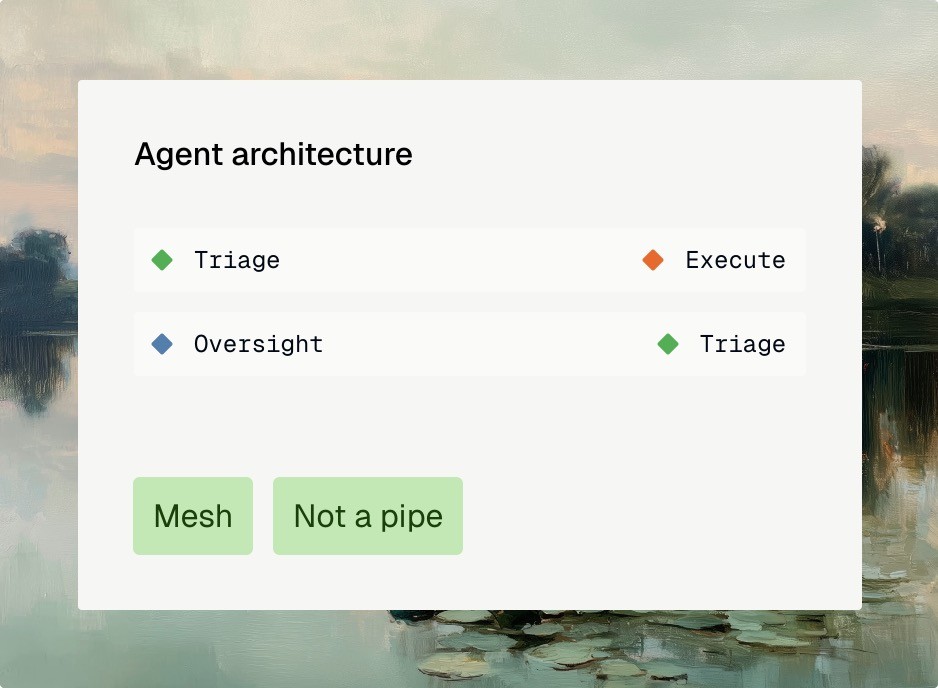
That's why we built Relay as a connective layer, not another destination. Relay agents sit between your tools and handle the handoffs that used to require a human in the middle. A support ticket comes into Zendesk, the agent checks the customer's account in your CRM, applies the right policy, processes the action, and updates the status - all without anyone copy-pasting between tabs.
The goal isn't to replace your stack. It's to make it actually work together. We've seen teams cut their tool-switching time by 60 percent in the first month. Not because they removed tools, but because they stopped being the middleware.
From the Relay team